Seeing gorillas in the wild is a once-in-a-lifetime adventure, and both Rwanda and Uganda are top spots. But which one is right for you? Rwanda is easy to reach, full of luxury lodges, and set against stunning volcano scenery. Uganda has dense rainforest jungles, lower costs, and more wildlife and safari options. Plus, Uganda offers a rare experience called gorilla habituation, where you can spend four hours with a gorilla family! Trekking in Rwanda is usually easier, while Uganda gives more variety—from gentle walks to tough, adventurous hikes. This guide also covers the best times to visit, where to stay, and what else you can do beyond gorilla trekking. Whether you want a short, comfortable trip or a longer, budget-friendly adventure, both countries promise an unforgettable chance to meet mountain gorillas up close.
Where You Can See Gorillas in Rwanda & Uganda?
Mountain gorillas live in only a few special places in Africa.
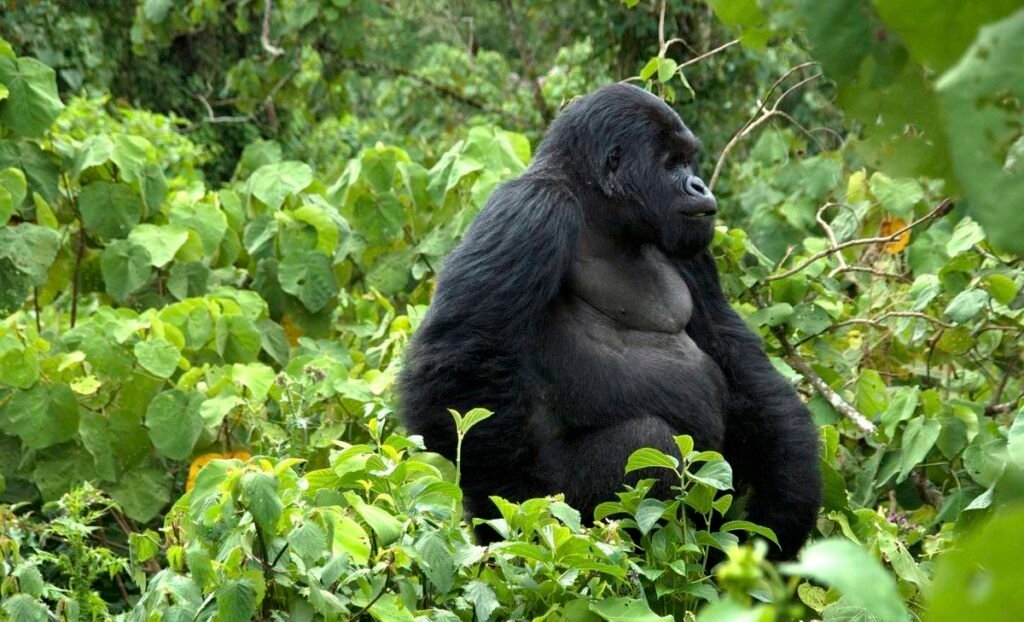
The best countries to see them are Rwanda and Uganda. About half of all mountain gorillas live in the Virunga Mountains, a chain of volcanoes that includes three national parks—one in Rwanda, one in Uganda, and one in the Democratic Republic of Congo. In Rwanda, gorilla trekking happens only in Volcanoes National Park, famous for Dian Fossey, the scientist who protected the gorillas. Here, visitors can meet about 10 gorilla families up close.
Uganda has two main parks for gorilla trekking: Bwindi Impenetrable National Park and Mgahinga Gorilla National Park. Bwindi is a huge, thick jungle with around 500 gorillas in 50 families. Of these, 26 families are used to visitors and open for trekking, making it one of the best places in the world to see gorillas. Mgahinga is smaller but also home to gorillas near the volcanoes. Both Rwanda and Uganda give amazing opportunities to see these gentle giants in their natural home. If you want an unforgettable gorilla adventure, these countries are the top choices!
Gorilla Trekking Costs: Rwanda vs Uganda
One important thing to know when comparing Rwanda and Uganda for gorilla trekking is the cost of gorilla permits. A gorilla permit is like a special ticket that lets you see these amazing animals up close in the wild. The money from the permit helps protect the gorillas and supports people living near the parks.
In Uganda, a gorilla permit costs $800 per person. It’s a great choice if you want an incredible experience without spending too much. In Rwanda, a gorilla permit costs $1,500 per person. It’s more expensive, but the money helps protect the parks and support local communities. Other costs also differ. Rwanda has more luxury lodges, which make your trip very comfortable but cost more. Uganda has lots of mid-range lodges, which are easier on the budget.
Getting around Rwanda is usually easier and cheaper because Volcanoes National Park is close to Kigali, the capital. In Uganda, the parks are farther away, so travel takes more time and money.
What to Expect on a Gorilla Trek?
Gorilla trekking in Rwanda and Uganda is similar, but there are some differences.
In Rwanda, trekking happens only in Volcanoes National Park, which is small and easy to get around. Everyone meets at the main park office in the morning. Your permit is checked, and you join a group of 8 people based on fitness and interest. After a short briefing, you drive a little way to start your trek.
In Uganda, most trekking is in Bwindi Impenetrable National Park, which is much bigger. Bwindi has four areas—Buhoma, Ruhija, Rushaga, and Nkuringo—each with its own gorilla families, trails, and lodges. You choose your permit and lodge based on the area you visit. In both countries, treks start early in the morning.
You may hire a porter to carry your bag and get a walking stick for support. An armed ranger leads the group, and guides work with trackers to find the gorillas. The hike can last 1 to 6 hours, depending on where the gorillas are. When you find them, you wear a face mask and stay quiet. Then comes the best part—you spend one magical hour with the gorillas, taking photos and watching them eat, play, and interact.
Is Gorilla Trekking Easier in Rwanda or Uganda?
Gorilla trekking in Rwanda is usually a bit easier than in Uganda, but it depends on where the gorillas are. In Volcanoes National Park, Rwanda, trails are clear and easy to follow. But the higher altitude (2,400–4,500 meters) can be tiring for some visitors. In Uganda’s Bwindi Forest, trekking difficulty depends on the area. Buhoma has easier, well-kept trails like Rwanda. Rushaga and Nkuringo have steep hills, thick forests, and slippery paths, making them harder. Bwindi also gets more rain, which can make trails muddy and tricky. Overall, Rwanda is easier, while Uganda has options for both easy and challenging treks. Good fitness is needed anywhere, as treks can last 1–6 hours.
Scenery: Volcanoes vs Bwindi
Both Rwanda and Uganda have amazing scenery, but they are very different.
In Rwanda’s Volcanoes National Park, you’ll see rolling hills, bamboo forests, and volcanic peaks. The trek starts near farms and open fields, then moves through bamboo groves and forests. Higher up, you get wide views of green mountains and valleys. The forest feels open and bright, making it easier to spot gorillas.
In Uganda’s Bwindi Forest, the jungle is dense and thick. Tall trees, vines, moss, and ferns create a cool, mysterious forest where sunlight barely reaches the ground. Trails wind through hills, streams, and valleys, giving a real rainforest adventure. In short, Rwanda has open, scenic mountains, while Uganda has a deep, magical jungle.
Uganda’s Unique Gorilla Habituation Experience
Uganda is the only place where you can join a gorilla habituation experience. This special trek lets just four visitors follow a wild gorilla family that is not yet fully used to humans, along with researchers and trackers. Unlike regular gorilla trekking, which lasts one hour, habituation treks can last up to four hours.
You move with experts as they carefully observe and help the gorillas get used to people. This slow process, called habituation, usually takes 2–3 years. Its goal is to make gorillas safe and calm around humans. The trek happens in Bwindi Forest and costs $1,500, the same as Rwanda’s regular gorilla trek. It is more challenging physically but gives a rare, unforgettable look at gorillas in their natural home.
Is Gorilla Trekking Safe in Both Countries?
Yes! Gorilla trekking is very safe in both countries.
The gorillas, even the huge silverbacks that can weigh up to 200 kg and stand over 6 feet tall, are usually calm and gentle, especially those used to humans. During your trek, you are always with trained guides, trackers, and an armed ranger who make sure both you and the gorillas are safe. Before the trek begins, you get a full safety briefing.
You will learn simple rules like keeping your distance, staying quiet, and moving slowly.
Following these rules ensures a peaceful and respectful encounter with the gorillas. Both countries take gorilla conservation seriously, and their park staff are highly trained. Safety is a top priority, so if you follow your guides’ instructions, you can relax and enjoy this once-in-a-lifetime adventure safely.
Best Lodges in Rwanda vs Uganda
Both Rwanda and Uganda have great places to stay for gorilla trekking, but the experience feels different in each country. Rwanda is famous for its luxury lodges. If you want comfort, style, and stunning views, Rwanda offers many top-end options. Most lodges sit on hills with amazing views of the Virunga Mountains or nearby lakes. They are usually a short drive from Volcanoes National Park, rather than right next to the forest.
Uganda has more mid-range and budget lodges, though it also has some luxury options. Many lodges in Bwindi Impenetrable Forest are right next to the jungle—or even inside it—so you can wake up to the sounds of birds, monkeys, and sometimes even gorillas. In Rwanda, you get luxury and sweeping mountain views. In Uganda, you stay closer to nature and the jungle, often at a lower cost.
Which Park Is Easier to Reach for Gorilla Trekking?
Yes! Gorilla trekking is very safe in both countries.
The gorillas, even the huge silverbacks that can weigh up to 200 kg and stand over 6 feet tall, are usually calm and gentle, especially those used to humans. During your trek, you are always with trained guides, trackers, and an armed ranger who make sure both you and the gorillas are safe. Before the trek begins, you get a full safety briefing.
You will learn simple rules like keeping your distance, staying quiet, and moving slowly.
Following these rules ensures a peaceful and respectful encounter with the gorillas. Both countries take gorilla conservation seriously, and their park staff are highly trained. Safety is a top priority, so if you follow your guides’ instructions, you can relax and enjoy this once-in-a-lifetime adventure safely.
Is Gorilla Trekking Easier in Rwanda or Uganda?
If you want the fastest and easiest gorilla trekking trip, Rwanda is the best choice.
Volcanoes National Park is only about 2.5 to 3 hours’ drive from Kigali, the capital, on smooth roads. You can fly in and start trekking the next day, which is perfect if you have little time. Uganda is a bigger country when compared to Rwanda, so getting to its gorilla parks takes longer. From Entebbe International Airport, the drive to Bwindi Impenetrable or Mgahinga Gorilla National Park can take 8 to 10 hours. Many travelers turn this into a longer safari trip, visiting places like Murchison Falls, Kibale Forest, or Queen Elizabeth National Park over one or two weeks.
There is a shortcut. Bwindi and Mgahinga can also be reached from Kigali, Rwanda, in 3 to 5 hours depending on the trekking area. This works well for southern sectors like Rushaga, Nkuringo, and Mgahinga, which are near the Rwanda-Uganda border. This route lets you enjoy Uganda’s lower-cost permits with almost the same travel time as Rwanda.
If you want to skip the long drive, Uganda also offers domestic flights from Entebbe to Kihihi or Kisoro, followed by a short drive to your lodge near the park.
Other Activities in Rwanda and Uganda
Gorilla trekking is the main attraction, but both Rwanda and Uganda have other exciting things to do.
Uganda offers more classic safari options. If you want to see lions, elephants, giraffes, and buffalo, visit Murchison Falls or Queen Elizabeth National Park. These parks have game drives, boat safaris, and even tree-climbing lions. You can see rhinos at Ziwa Rhino Sanctuary to complete the Big Five. Uganda is also the best place for chimpanzee trekking, in Kibale Forest, Budongo Forest, or Kyambura Gorge. After a safari, Lake Bunyonyi is a peaceful spot to relax before going home.
Rwanda has fewer safari options but still has amazing experiences. Akagera National Park is its main savannah park, where you can see the Big Five. The park is smaller and less crowded, with beautiful hills, lakes, and open plains. For rainforest adventures, Nyungwe National Park is perfect. This lush forest is home to 13 types of primates, including chimps and colobus monkeys, and has a famous canopy walk with stunning views of the forest.
Best Time to Go Gorilla Trekking
The best time for gorilla trekking in Uganda and Rwanda is during the dry seasons, from June to September and December to February. During these months, there is less rain, the trails are easier to walk, and it’s easier to see the gorillas. In Rwanda, the short dry season from mid-December to early February is very popular. The weather is pleasant, the paths are safer, and there is less risk of malaria. This makes it the perfect time to trek in Volcanoes National Park.
Uganda is warm all year, so you can visit anytime. But Bwindi Forest is a rainforest, so it can be wet and slippery even in the dry season. No matter when you go, bring waterproof clothes and good hiking shoes. If you want the easiest trekking conditions, go during the dry months. If you don’t mind some rain and want fewer crowds, the wet season can also be a special and quiet experience with the right preparation.
Can Families and Kids Join Gorilla Treks?
In both Rwanda and Uganda, children must be at least 15 years old to go on a gorilla trek. This rule keeps both kids and gorillas safe, since younger children might find the trek too hard or behave unpredictably around the animals. In Rwanda, the rule is strict. Only kids 15 and older can join—no exceptions. In Uganda, the rule is a little more flexible. Kids as young as 13 may be allowed to trek if they are fit and have written permission from a parent or guardian. This is decided case by case and is not guaranteed. If you want to go gorilla trekking with younger teens, Uganda might be easier, but you need to plan ahead and get permission early.
Which Country is Right for You?
Gorilla trekking in Rwanda and Uganda is amazing in both countries—you’re very likely to see gorillas, and the experience is magical either way. The main difference is cost and style. Rwanda is easier to reach and has more luxury lodges, but permits and hotels are more expensive. Uganda is cheaper, with more mid-range options, and lets you explore other parks and wildlife beyond gorillas. Your choice can also depend on your travel plans. If you’re combining trekking with a longer safari, Uganda is a great option. If you want a shorter trip with more comfort, Rwanda is the best choice. Either way, both countries give you a once-in-a-lifetime chance to see mountain gorillas.