
The Mountain Gorilla
April, 24, 2026
Meeting mountain gorillas face-to-face in the mist-covered mountains? That’s the kind of thing you will be telling people about for years. These impressive apes live deep in the rainforest jungles of East and Central Africa. During a gorilla trekking tour, you see these endangered apes in their natural habitat. It is a dream come true for many people.
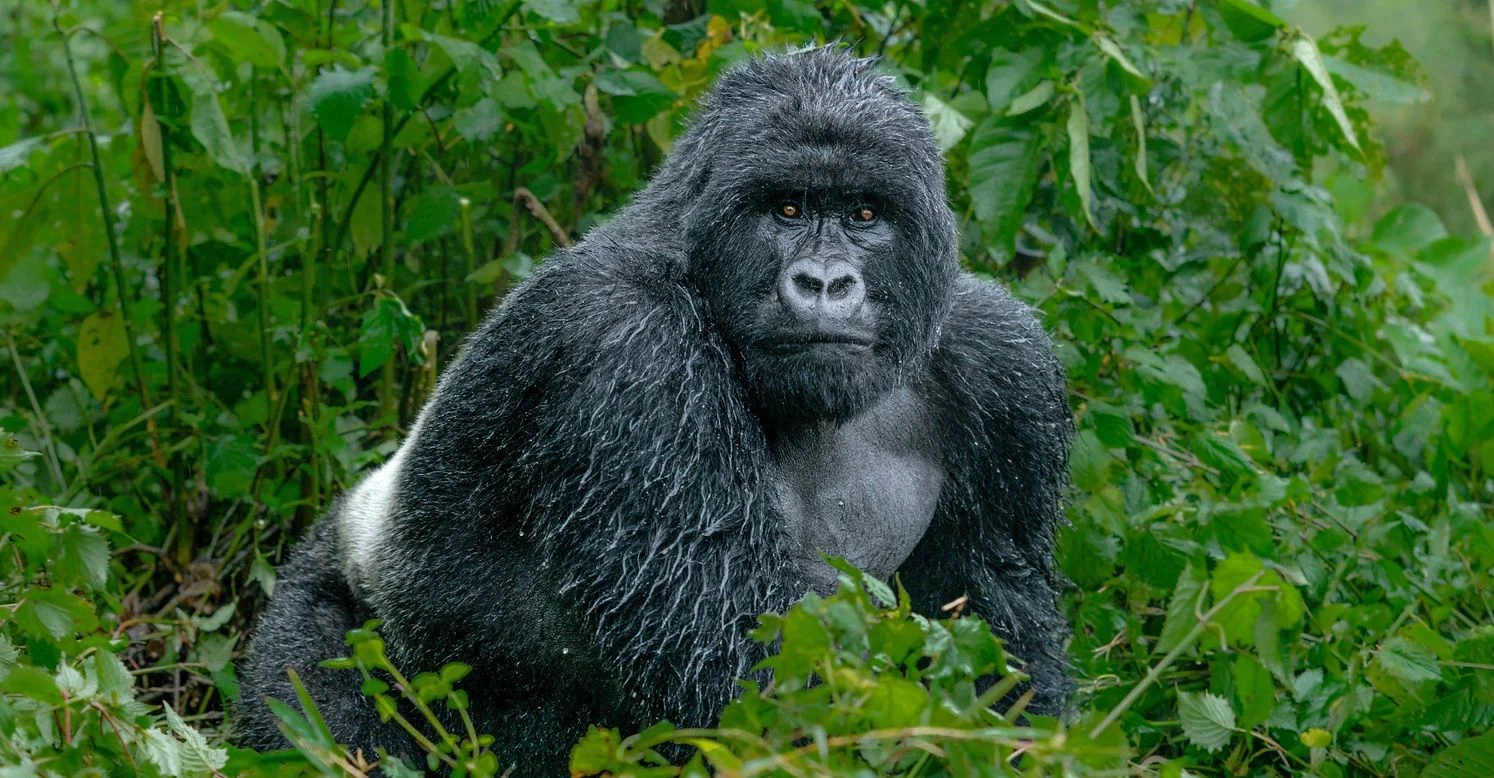
The extraordinary mountain gorilla
Mountain gorillas are a rare subspecies of the eastern gorilla. They are among the most endangered primates in the world. Today, they live in only two regions in Central and East Africa. These are the Virunga Mountains and Bwindi Impenetrable National Park. Their story is one of hope. In 1989, only about 620 individuals remained. Today, the population has grown to around 1,063. This success is the result of strong conservation efforts and careful protection. Despite this progress, mountain gorillas are still classified as Endangered by IUCN. Their habitat is small and fragile. They are also vulnerable to disease and illegal activities. Seeing them in the wild is not just special—it supports their survival.
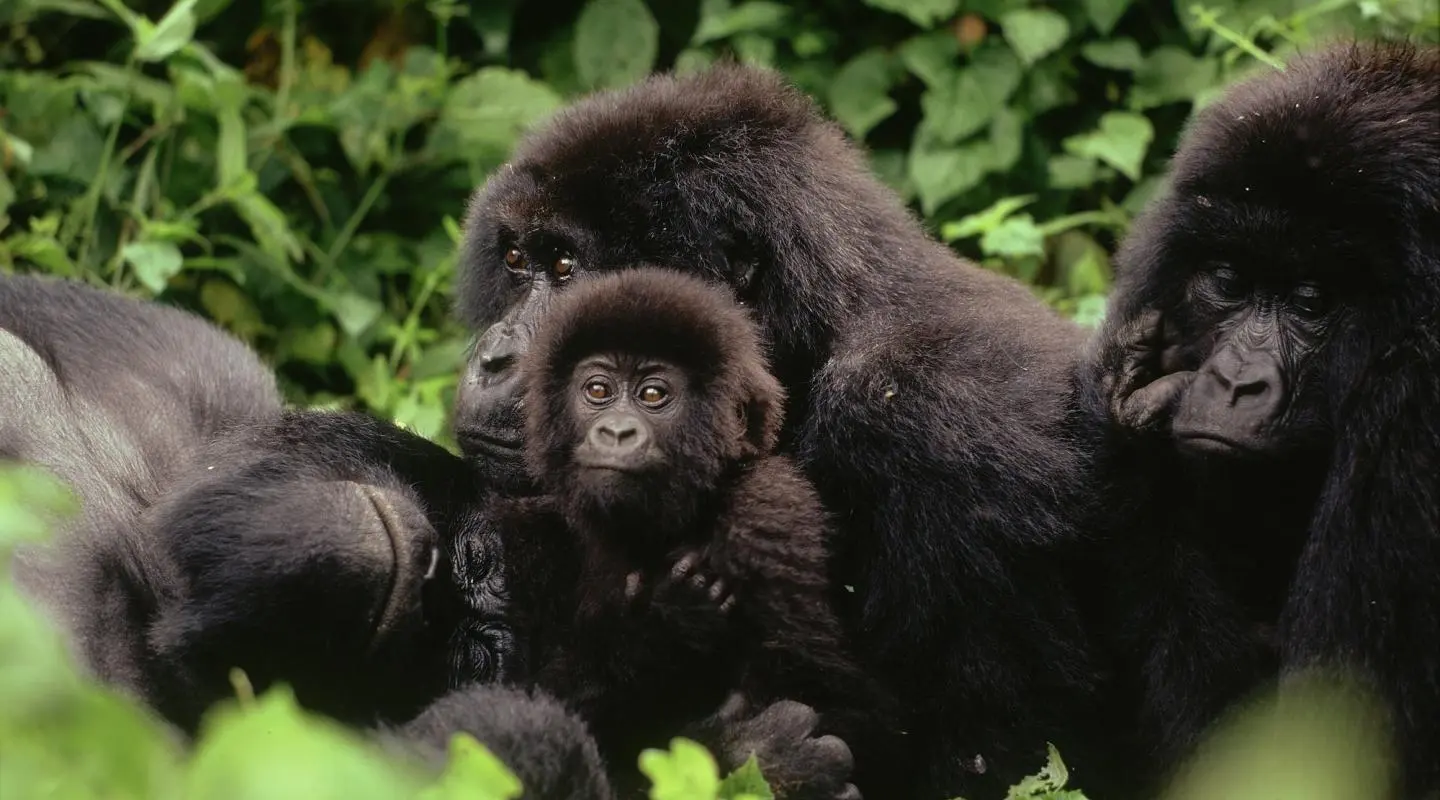
Where do mountain gorillas live?
Mountain gorillas live only in Central Africa. Their range is very small and limited to the borders of Uganda, Rwanda, and Democratic Republic of the Congo. They are found in two main regions: the Virunga Mountains and the Bwindi–Sarambwe ecosystem.
The Virunga region includes three protected parks:
- Virunga National Park
- Volcanoes National Park
- Mgahinga Gorilla National Park
The Bwindi–Sarambwe area includes:
- Bwindi Impenetrable National Park
- Sarambwe Nature Reserve
In the past, these two populations were connected by forest. Today, that natural corridor has largely disappeared due to human settlement and farming. This means the two groups no longer mix. As a result, there are slight differences. Gorillas in the Virunga tend to live at higher altitudes. They often have thicker fur and can appear larger. Even so, all mountain gorillas are still considered one subspecies.
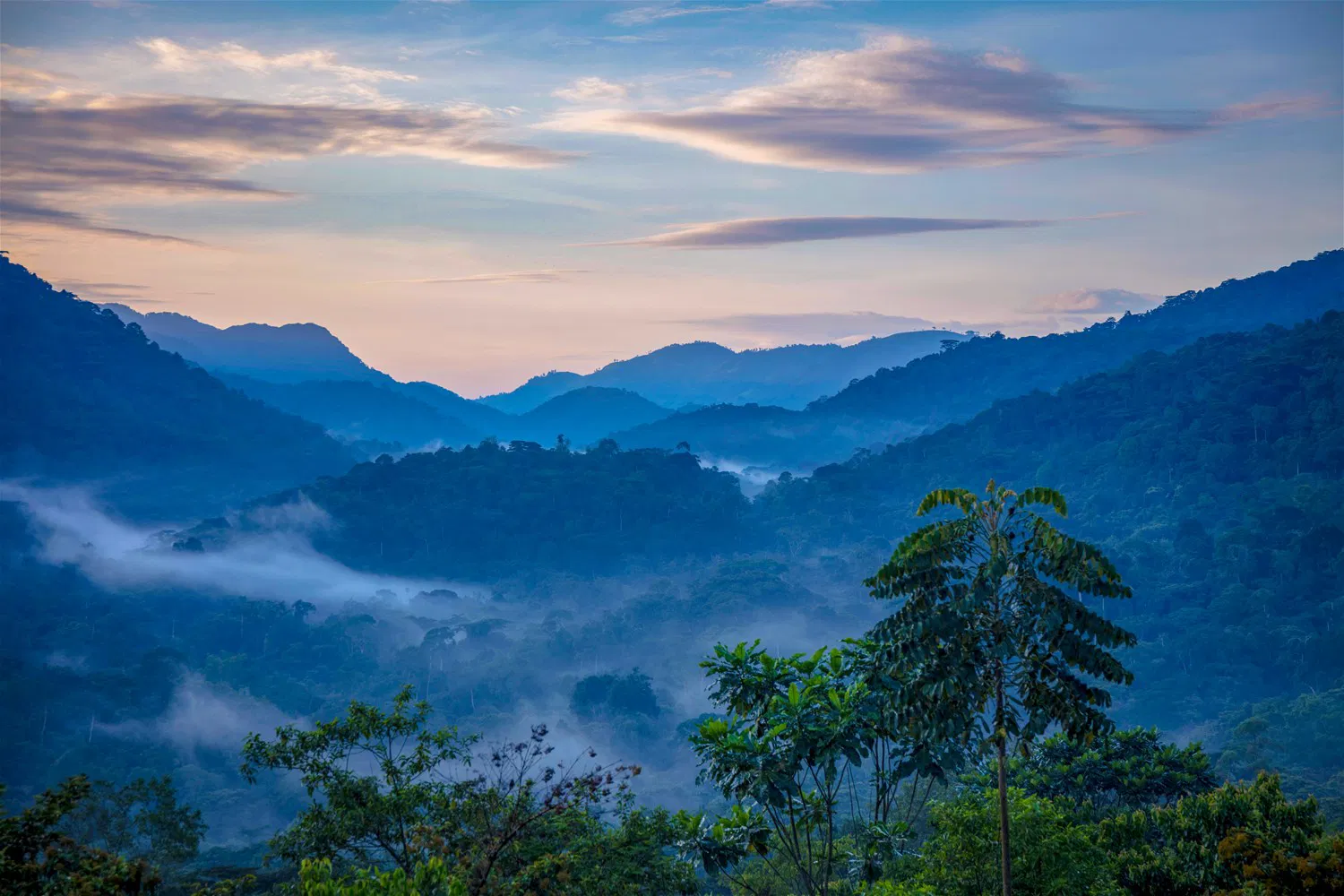
Appearance and behavior of the mountain gorilla
Mountain gorillas are the largest primates on Earth.
Adult males are known as silverbacks, named after the silver-gray stripe of hair that develops across their backs as they mature. These powerful animals can weigh up to 220 kg and stand about 170 cm tall when upright. Females are smaller, usually weighing between 90 and 100 kg.
They live in social groups that typically range from 5 to 15 individuals, although some groups can grow to as many as 30 members. Each group is led by a dominant silverback, while the rest includes females, their young, and sometimes younger males.
Mountain gorillas are active during the day. They spend most of their time feeding and resting. They are mainly vegetarian, feeding on leaves, stems, bark, wild celery, and fruit, with occasional insects. In Bwindi Impenetrable National Park, fruit is more common in their diet, while in the Virunga Mountains, they rely more on herbaceous plants. Each evening, they build nests, usually on the ground, where they sleep as a group, though each individual makes its own nest.
Their social behavior is highly developed and deeply fascinating. Gorillas form strong bonds through grooming, playing, and gentle communication. The silverback protects the group at all times. When threatened, he may display power through chest beating, vocal sounds, and bold postures to keep the group safe.
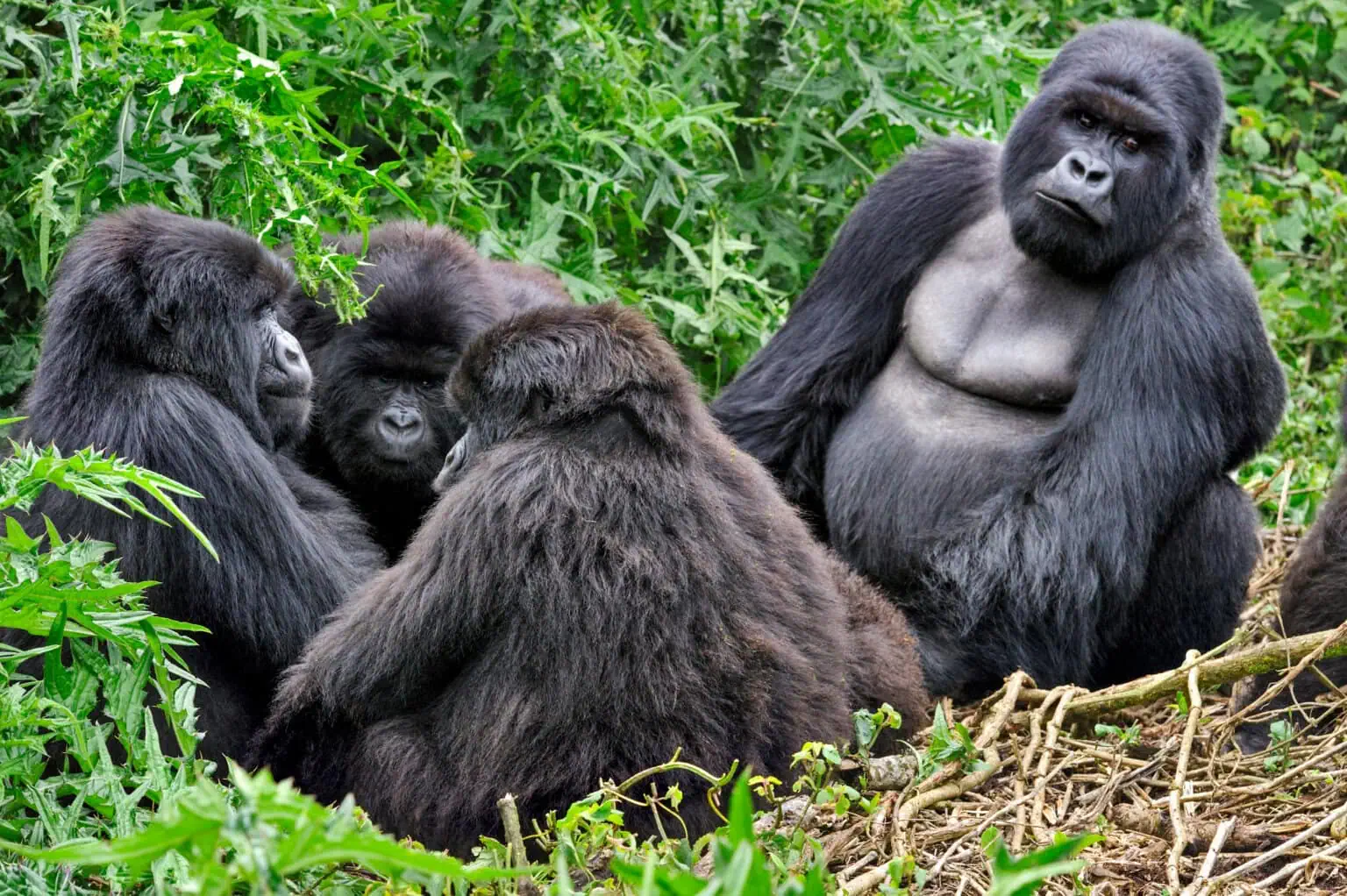
Gorilla trekking in Uganda and Rwanda
Gorilla trekking is a guided walk through dense rainforest in search of a mountain gorilla family. You take part in this experience in places like Bwindi Impenetrable National Park and Volcanoes National Park. The trek can vary in difficulty. Some walks are short and gentle. Others are longer and more demanding, depending on where the gorillas are that day. On average, the experience lasts between two and six hours. You do not need to be an athlete, but a reasonable level of fitness is important.
During the trek, strict rules are followed to protect the gorillas. You must keep a distance of at least seven meters, speak quietly, and avoid using flash photography.
The gorillas you visit are habituated. Over time, they have become used to human presence. This careful process allows you to observe them up close without disturbing their natural behavior.
Your contribution to nature conservation
To visit mountain gorillas, you must purchase a gorilla permit in advance through the Uganda Wildlife Authority or the relevant authority in Rwanda. This permit is not just an entry ticket, it directly supports conservation. A significant portion of the revenue is invested in protecting gorillas and their habitats. It funds ranger patrols, monitoring, and long-term conservation programs within parks like Bwindi Impenetrable National Park.
Importantly, local communities also benefit. In Uganda, around 20% of permit revenue is shared with villages near the parks. This supports schools, healthcare, and local infrastructure. This approach has transformed attitudes. Communities that once saw gorillas as a threat now help protect them. By taking part in a gorilla trek, you are actively contributing to the survival of this endangered species and supporting sustainable tourism.
Setting off well-prepared
Preparation makes all the difference. Dress for the forest. Wear sturdy hiking boots with good grip. Choose long trousers and long sleeves to protect against thorns and insects. Always carry a light rain jacket, the weather in places like Bwindi Impenetrable National Park can change quickly. Pack light, but smart. A small backpack with water, snacks, sunscreen, and gloves is ideal. Gloves are especially useful when navigating steep or muddy sections of the trail.
Do not forget your passport. It is required for permit verification at the briefing point. Timing matters. Arrive early and be ready. The pre-trek briefing starts promptly at 8:00 am. This is where guides assign groups and explain safety rules.
A unique experience
One hour with mountain gorillas may sound brief. It is not. Time slows down the moment you arrive. Every movement feels powerful and real. You watch them feed, groom, and play. You begin to notice the small details; the way a mother holds her infant, the quiet communication within the group. Then the silverback looks at you. Calm. Aware. Unmistakably present. It is a moment that stays with you. Standing just meters away from these incredible animals, deep in forests like Bwindi Impenetrable National Park, is something few experiences can match. It is not just wildlife viewing. It is something deeper. Quiet. Emotional. And truly unforgettable.
Plan your trip in time
Gorilla trekking is in high demand. Permits are limited and sell out quickly. This is especially true during peak seasons from June to September and December to February. If you want the best choice of dates and locations, book well in advance. This is particularly important for popular areas like Bwindi Impenetrable National Park. Planning early gives you more flexibility. It also allows you to match your permit with the right lodge and travel route. A well-planned trip makes the experience smoother, more relaxed, and far more rewarding.
Meet the mountain gorilla with Wildfriends Africa
Would you like to know more about gorilla trekking in Africa? Then check out our special gorilla trekking page or discover all our trips. Would you prefer personal advice? Please feel free to contact us.
Our Best Gorilla Safaris
Your Gorilla Trekking Trip
May We Help You?
From gorilla permits to transport, and from accommodations to activities: helping you find your way around Uganda and Rwanda is what we love to do! Receive more information free of charge and without obligation.
Gorilla Safaris
Contact
- +256 (704) 630 390
- +256 (394) 860 595
- info@trekwildgorillas.com
- wildfriendsug@gmail.com

Trek Wild Gorillas
Typing...
Have A Question About Gorilla Trekking? We’re happy to help you plan your journey. Chat with us on WhatsApp, we are online
Contact Us
Chat